Category: Uncategorized

  • Can Russia really invade Ukraine?

    This is not a question of Russia’s potency, but of whether the Russian bear is willing to gamble with a prospective invasion, its economic and political costs, regardless. Over the last few days, there has been much drama in diplomatic circles with most talks with Russia clogged with hubris, more on the part of latter. Maybe it’s not that, as Joe Biden thinks, Putin simply wants to invade because he really “has to do something.” The strategic calculus that drives Putin’s actions is, in a word, rash — not so much with wanton invasions but with how it wishes to garner support, external or domestic. 

    Theories abound, and most experts suggest that a war is not on the cards. There are many reasons for this, as evinced by the speculations of various observers in different parts of the globe, though we might not be able to soothsay with prescient clarity yet. 

    Some 100,000 troops have amassed at Ukraine’s borders, with a substantial portion being moved into Belarus as well giving Russia significant clout in the event of a war. In fact, the concentration of 56 Battalion Tactical Groups (BTG) near Ukraine’s border is the largest troop build-up in Europe since the end of Cold war. Apart from being a ruse to affirm its superpower status, Russia’s threat is a muscular manifestation of its desire to not see Ukraine and other countries that lie on its periphery (like Georgia) from being inducted into the NATO-clique. Moreover, NATO’s military activities and missile systems in eastern Europe are perceived as a threat, because of its reach into the Russian mainland, and Russia wants it all to be rolled back. It also wants NATO to cut all ties it has with Ukraine and other former Soviet Republics. 

    Suppose Russia attempts a full-fledged invasion, what are the likely consequences? A big war as Putin envisages it, the biggest seen in Europe since the 1940s, would cost many lives and bring economic costs. Sanctions would be harsh. In the short-term, Russia would be able to make ends meet, but in the long haul it’d find its throat dry as a bone. The inhabitants of the country, who for no fault of their own, would have to endure penurious hardships, making them more as a consequence, angrier and thirstier for change. For many goods that it produces, it requires component parts that are imported from abroad. In the event of a war, hopes of a thriving industrial base can be buried. Geopolitically, every country, in its neighbourhood and those that lie further apart, will tend to view Russia with Pyrrhonstic eyes, refashioning its dealings with the former Cold war giant appropriately. NATO, who’s already at the wrong end of the stick, will romp up defences tremendously and other hitherto pacifist countries around Russia will consider joining the bloc. What’s more, an invasion would set a dangerous precedent for other countries looking to invade tiny enemies; prospectively, China on Taiwan. Around the world, the guards would be lowered and totalitarian regimes will find little reason to abide by peaceful conduct and proclaim, at least as a facade, the need to preserve human rights. Impunity would blight every part of the globe. America too is not impervious to these pernicious effects. 

    That said, there is enough evidence to safely conclude that an invasion will not take place. For one, Russia’s previous invasions were determined a pragmatic calculus, a set of conditions which a given crisis would have to fulfil in order to prompt a full-scale invasion. Twice during the twenty first century, in the 2008 Georgia invasion as well as 2014 annexation of Crimea, a Ukrainian peninsula, the oddities of the crises were such that Russia did not have to look anywhere before barging next door. Briefly, the five variables on which Russia’s strategic moves rests are: one, trigger — a justifiable cause that beseeches its intervention; two, local/domestic support for its operations — it cannot afford ruffle feathers if the consequences of an imminent war could make Russians potentially poorer and weaker; three, anticipated military reaction — if the destination country’s forces are week, then so much the better for Mr. Putin; four, technical feasibility — losing tons of troops and armaments in a futile battle does not seem like an ideal end; and five, relatively low anticipated political and economic costs — in a tightly interconnected world, which cannot simply do without it, the perils of antagonising other countries are too onerous to be enlisted here. With the close of the cold war, Russia’s diminutive status in the unipolar world is more than evident. It’s at the mercy of the west, no matter how hard it tries to assert its supremacy by cutting off gas pipelines and displaying ostentatiously its fighter jets. Where these five variables were not met, Russia has refrained from invading, as in the case of Estonia. In 2007, the Bronze Soldier event proved a trigger of sorts for a prospective Russian invasion. But it did not budge. For Estonia was a part of NATO and a military operation simply was not feasible. Plus, it did not help any of Russia’s geopolitical imperatives — namely domestic political consolidation, desire to expand its leverage regionally, and the need shield itself from external threats. 

    At present, the smart move would be to keep talking, deliberating with officials from Russia. The west must not be afraid to heap huge sanctions and other detrimental pressures on Russia and must be, more importantly, unequivocal in its support for Ukraine. There are no two ways here. With the threat of an imminent conflict escalating on the ground, the crisis has become more of a zero-sum game, and the west, including the NATO must be willing to pay the risks for alienating Russia and possibly getting beneath its allies’ hair. Moreover, it’s also a question of how far Russia is willing to be pragmatic in the choices that it makes. A war can wreak severe political and economic costs for the Russian bear; a harmonious relationship with the West is its best bet. In this person’s opinion, apart from fear of its strategic imperatives being jeopardised, the threat of ‘war’, the hauteur of its diplomats, is nothing but a subterfuge on the part of Russia to gain the world’s attention and assert its non-existent supremacy. After all, Russia needs to do something, once in a while.  

  • Frühromantik

    Frühromantik

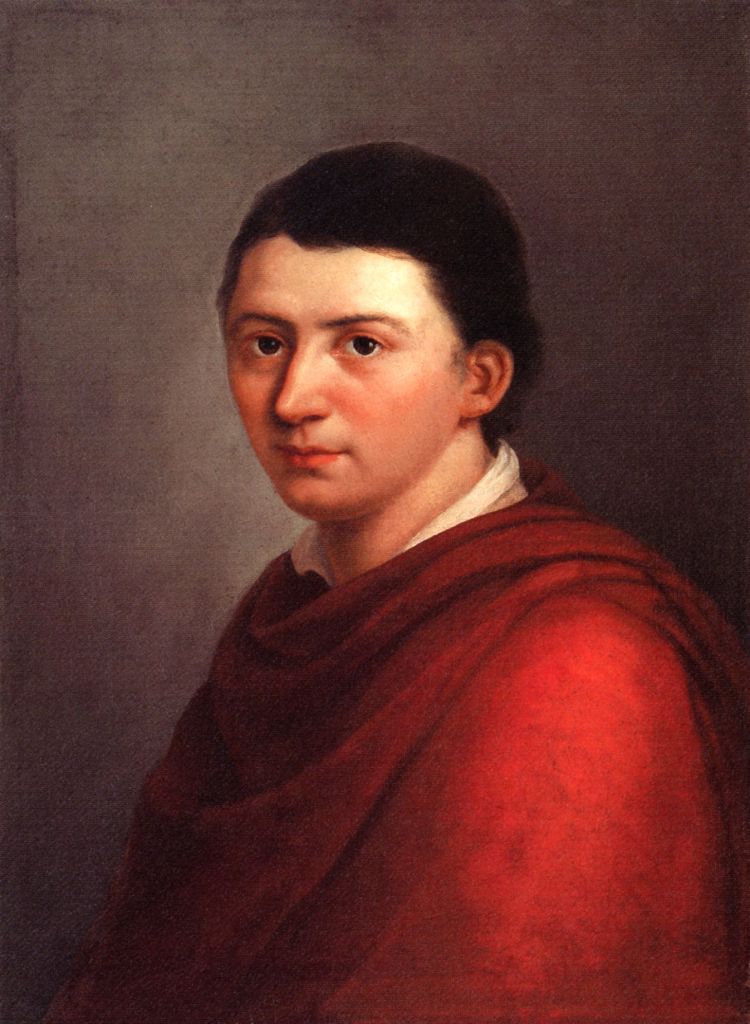
    For the truth of reality to be pearled in art’s tranquil verve, that’s what the “The Oldest System Programme of German Idealism” idealises in its razor-sharp rhetoric infused with freedom and passion. “The state…should cease to exist,” it said in words betraying an anarchist imagery, envisioning a new society constituted by absolutely free beings, girdled with threads — of liberty, equality, and brotherhood — spliced, and the loose strands clamouring for artistic emancipation jutting out. Holderlin, Hegel and Schellong (whose brainchild is this manifesto) had a dim view of the state; a “miserable apparatus” their fragment said. Decrying the superstitious, the shallow pretence of reason, their minds would stretch even beyond, with hopes of aestheticising the philosophical. “[beauty] comprises all ideas, and … truth and goodness are fraternally united only in beauty. The philosopher must possess as much aesthetic power as the poet,” they said. A ‘mythology of reason’ that would enlighten every (living) soul, to the extent of intellectual sagacity being heaped on all, far and wide — a shadow of the aesthetic spirit, and which they believed would beget true equality. 

    The 1796-dated politico-philosophical fragment, set the precedent for a broader movement that would rediscover the subverted talents of humanity — its power of imagination, creativity, and the zeal of its emotions. Early on, in the nineteenth century a triad of three intellectuals (bestowed with an astonishing command of aesthete) would call their philosophical work ‘romanticism’ to distinguish their creations from the larger rigid, sombre currents of the day. The movement’s often pitted against the rationalist movement of the enlightenment of the preceding century. Against its classicist sensibility, even more. But for its forebears in Jena, Friedrich Schlegel, Friedrich Von Hardenberg (or Novalis), and Friedrich Schleiermacher (who were acclaimed for their literary criticism, poetry, and theology, respectively) their philosophical enterprise was more an effort to cultivate rational thought, that flies in the face of all that’s predisposed to dogmatism, superstitiousness, naive religious traditionalism and the repressive conservatism of the time — than an apology for emotions. It was a novel kind of iconoclasm, which concocted doctrines of liberation and creativity in the right proportions. In a way, given its rationalist proclivity, Early German Romanticism (or Frühromantik, as it was called) was spearheading the work of Kant and other major enlightenment figures, for the next century and beyond. 

    If there’s a term that would define the process by which the three philosophised, collaborating and complementing each other, providing constructive criticisms, and celebrating the deserved, a mutually conceived intellectual amour that goes afar the dispositions of our day — it would be ‘symphilosophising’, a term as novel as their philosophy. It is only unfortunate that the currents of their thought got commingled with the ideas of the later romantics who saw art as a repudiation of rationalism, in an overwhelming comber of that porous expression ‘romanticism’, bearing and passing on unintentionally the subtleties individual to their own movements. In itself, Frühromantik embosoms much that is of literary merit, equally profound in its temptations and canons, and what’s adumbrated here is a mere bough of the all-encompassing life form it was, though it breathed only for a short while. Romanticism, as the prevailing emotion of the writings and artistry of the time, has been bestowed with a literature of its own that deftly analyses and unravels its every fine point. But to be enriched individuals, to acquire the taste of real philosophising, we must turn back to the three greats of Jena. 

  • This amorphous ‘self’

    This amorphous ‘self’

    The gloomy verdures, the hodgepodge in rooms that barely fit the description of a nook, the painting on the wall tilted almost to take the form of a rhombus, the beetle crawling atop the foot of the bed, the bland fields that lie scorched – these are the scenes that dot Don Palathara’s frames. A breakaway from the mainstream anthropocentric focus on the supposedly autarchic ‘self’ with its endless conflicting passions, to an archaic canvas of a socially constructed self, placed within surroundings that intimidate one of undulating terrains, matte and dull homes, is what best characterises Palathara’s takes in his films – to quote an exceptional one, ‘Central Travancore, 1956’, – and this to some extent also surfaces a mirage resplendent in a post-modernistic evanescent lustre, a reminder of its looming influence which could metastasise to many popular culture arenas before long. 

    The ’subject’ and not the self, was the postmodernist’s reply to Kantian notions of individualist rationalism. A fluid subject that rills through the turbulent sea that replenishes waters with changing discourses of power. Doused by the muddy waters of the larger patriarchal discourse is the unbeknown male they say, who is nothing but a mere epiphenomenon of everything that girdles him, the plaits of which he hesitantly hopes to untangle. The postmodernist fiction too reflects these sentiments – the deconstruction of the ‘unified self’  that lays bare-chest much of the humanisms, the Panglossian teleologies, larger-than-life autonomies and unbreakable homogeneities we took for granted. In its own right, Rushdie’s Midnight’s Children is a prescient archetype of the post-modernist novel. As Peter Currie writes in Contemporary American Fiction (1987), ‘the focus of attention has shifted from the psychology of character..to a recognition of subjectivity as the trace of plural and intersecting discourses’. The protagonist herein is nestled in a blank cosmos that is perpetually expanding, without the knowledge of the character or the writer. The reader too glissades through cascading glaciers of linguistic constructs, that melt, metamorphose, and solidify, all at the same time. 

    At the stroke of the midnight hour, India woke to freedom, and so did Saleem and other children of this petite midnight hour (Rushdie’s Midnight’s Children). In fact, Saleem purports to be a marginal figure, more so a human – if an anthropocentric view is what you wish – yet the peripheral significance of his, to use a popular terminology, ‘angst’ in the grand scheme of things that were to engulf India at the time is so emblematic of the travails of that infant nation. The illogicalities of his sometimes insipid sometimes ornery emotions, that criss-cross discordantly, the existential quandaries – to use an overblown pop-philosophy chestnut – is a mirror to the identity crises the decolonised nation grappled with. So does Saleem share his fate with all who had born alongside him at numerous nooks and crevices of India – but temporally they were all suspended in the same plane; their minds were forged in one whole, their bodies mere contoured forms, at best misrepresentations of that unified hope that was India. Now that we are armed with the persepectives of a post-modernist, we discern a subtlety in their identities, a curious amalgam of the expressions of the time, shuttling between miscibility and immiscibility in the anxious discourse of power that bubbled all over the country. For the post-modernist novel, the action takes place in the fluid backdrop, or in the unidentified minds of the sometimes nameless discourses that surround us, or in the psyche of the protagonist, in a catch-22 herself, struggling to write the story that is before us, or to put it rather abstrusely, in everything we were so blind as to catch a sight of it. 

    How much ever gendered, racist, classist (and so on) we may be, the semantic, generic sobriquets we bequeath our-selves and to the other ‘selfs’ we interact with assumes an identity which nevertheless is the most unfathomable, phantasmal entity ever. Much of our politics of difference, antagonisms, superficial alliances are moulded on fragile foundations, which the sooner we become cognisant of, the earlier it crumbles. Saleem Sinai was a compounded obscurity, stuck together by irreconcilable atoms, that lend no electrons to each other, but unified by dint of the inviolable force that swirled around the floating discourses of the time. And to that extent, I, this amorphous self feels it benign to say, no less are we. 

  • Nirad Babu

    Nirad Babu

    What Macaulay ideated through his words, Nirad Chauduri consummated through his being — ‘a class of persons Indian in blood and colour but English in opinions, in morals and in intellect.’ Indubitably, in every sense of the word, he was an anglophilic polymath who could spurt Latin phrases, French words, even make allusions to the esotericisms of classical music, redeeming even the moderately-erudite Englishman into a green-eyed monster. 

    Linguistic profundities aside, Chaudhuri’s writing methodology is something laudable. By virtue—or sin (thoughts which presumably could’ve surfaced in the mind of our protagonist) — of being born an Indian, his language did not — or so he felt — come off as natural; and so he would test his (rather ornate) sentences against the ones written by English writers, by reading them aloud successively. This eclectic class ranged from Joseph Hooker to George Moore. If it sounded home-grown enough, he would go big guns (at the least expectedly so, for all we know). One may be tempted to label this as a purist tendency, yet his tenacious efforts and attainments speak of his penchant for the Master’s language, which, through a latitudinarian lens, is commendable indeed. 

    What most provoked the ire of fellow Indians was his blind adulation of the British civilisation. To quote one, the dedication he unabashedly attributed to the British in his The Autobiography of an Unknown Indian reads: ‘To the memory of the British Empire in India, which conferred subjecthood on us but withheld citizenship; to which yet every one of us threw out the challenge: “Civis Britannicus Sum” because all that was good and living within us was made, shaped and quickened by the same British rule.” That he endorsed the British niceties was an established fact then, but this one went overboard for it evinced an oblique flattery of the master at the cost of coating them in rose-tinted, mellowed criticisms. In a latter essay of his entitled Apologia Pro Scripta Sua, he makes the claim that it was nothing but a condemnation of the British, likening it to what Cicero said of the oppressor Vewes and his sore declaration “Civis Romanus Sum.” But even so, his defence remains hollow, strait-laced, and unconvincing at best. 

    Though English in intellect, the Bengali Nirad-Babu makes for an interesting character, for the study of the sociology of Indian-English writers. From being a journalist to a ‘vocational’ writer, and to an unsound preacher, the man’s unfavourable voice was imbued with slight quavers, which fought hard to wade through the cacophony of liberal Indian tones. One may or may not accede to his semantic adventures, but his style remains a deviant invention, praiseworthy or not. 

  • To engage or not? The Afghan discomfiture

    Amid the tiresome process of clearing the mess that had accumulated on my desktop, a note sizing not more than 1 kilobit caught my attention. The date next to the filename read ‘2nd August’. Curious to uncover the crap I had written in it – given that I customarily tend to scribble redundant thoughts that cross my mind like how a bulbul wings its way into a Sapien’s home, by chance, however — I clicked on it. A sentence hardly fitting a line did I find; it said, ‘A negotiated power-sharing agreement is the best-case scenario for #Afghanistan.’ Reading this precisely a month later, I felt unusually flustered than amused — which I would have otherwise been — at my vain prognostication. 

    For all we know, Afghanistan may have met its Waterloo on the morning of the 15th of August. Mayhaps, we are right; or going by the most implausible prophecy, we could well be wrong. ‘Amnesty’ to be extended to former government officials, a recognition of female education – feigned or not — have been the pallid assurances meted out by the Taliban in the wake of the huge outflux of frightened citizens, — the swarming of the airports proving itself a testament to the same. Reports float around of the deaths, injuries that took place on the premises of the visibly overwhelmed Kabul airport. Posters of women being scrapped from salons, tailor shops, and Islamist videos being aired in the place of soap operas, are the other indicative concomitants of the onset of the Taliban regime, which is at the helm after a physically daunting two decades of operations. That of Taliban fighters skitting about driving toy cars, no less. 

    To think their character has metamorphosed into something of a liberal overlord seems difficult to swallow, for these were the very claims – stability and security —the Taliban had made in the 1990s. The aftermath of the bloody civil war and their surge to power needn’t be repeated. The Gordian knot that awaits the Afghans is only too gruesome to say it out loud. 

    As the Taliban scramble to finalise their new regime – which they assure, to be more accommodating than it was during their first stint in power – the ageless question of ‘what next?’ seems to me a superfluous query, how much ever my reader is led to form a conflicting conclusion by dint of the enormous accounts on the said title pouring incessantly on the web. The apposite question or rather worry, at this point in time, would be as to how the world community prepares to go about it. 

    With the disorientation that comes with the thought of the Taliban forming a government next week, one that is equally disconcerting is of having to recognise a Taliban that holds a terrible human rights record. To accord a morally decrepit bunch legitimacy and recognition in the international arena is indeed unthinkably harrowing, if ethical standards in the conduct of geopolitics are anything to go by. 

    So much so for ethical standards that have universal validation and that which weeds out the ‘bad’ ‘rogue’ states and their ‘wrong’ ‘aggressive’ deportments – but who devises these? Indubitably, the United States, on the strength of being the sole superpower, has assertively, and at the same time discreetly, imposed a global moral standard that no other lesser nation has found supercilious enough to challenge for it has assumed the role of a boarding-school matron, keeping us to our toes, with the galling awareness of anything that can go wrong —albeit by dint of cultural differentials— lest it should draw the ire of the matron-lord of the world. 

    Nations, more often than not, employ, or devise to their passions, moral arguments for pivoting their national interests or in justifying otherwise unremarkable ventures; ten points if it reminds one of Obama’s vindication for the war in Afghanistan, terming it “the good war,” – to what extent ‘good’ it had been we are indeed a witness of, after the US left unexcitable on August 31st. The writer is not making a case for doubting the credibility of these arguments, but it’s rather their nature and the roughage that feeds these judgments in the first place. Historical experience tells us that moral judgments are often modified, amplified, and concocted at uncertain times, by great powers and coalitions, and are an effective pawn in their hands, no less potent than, to take an overblown example, a puppet state. And it is these states who dictate obliquely the moral order, which it expects culturally and thus morally divergent states to follow. Moral universalism then, we may say, is to be taken with a pinch of salt. A subscription to a particular moral system, which our conscience deems right, may nevertheless bring no harm to you or the larger society in which you thrive; however, by virtue of being rational agents, we are committed to unearthing the reason that underlies these norms. On these grounds, the pertinent issue herein becomes of how we’ve arrived at a stage where we call them morally undesirable, and of whether it’s justified in weening them the sole object of our judgment. The Taliban is undoubtedly an immoral, incorrigible, clique of Jihadists, who represent the worst of conservative emotions of the rural elements that fringe the Afghan society, and who have been vehemently opposing every reform brought in by waves of Afghan rulers. In parrying these reforms, the conservative sections found an ally, first in the British after the final Anglo-Afghan war in which King Amanullah effectually warded off the Anglicans, and later in the United States of America, that nurtured the Mujahideens lined along the Pakistan-Afghan border, from whom would arise the Taliban in the 90s, and of course, the Northern Alliance, though lionised for putting up a brave resistance against the Taliban, as a matter of fact, measures no less than the Taliban in its religious and female rights convictions. 

    Moral consternations aside, there are legal challenges too in recognising the Taliban; in the context of international relations, as a legitimate international actor. Recognition of a government that has acquired power through legal means – setting aside questions of undemocratic procedures — isn’t one that surfaces in standard debates for the problems contained therein are too narrow to be plodded through. But a transfer of power achieved through extra-legal methods is one that stokes many a heated vindications and rejoinders. The Taliban’s seizure of power through sheer force, by ousting the sitting government through unconstitutional means, is a plain manifestation of such a case. That the Taliban now effectively controls the state territory and would do so hereafter with a reasonable degree of permanence, with some sections of the population acquiescing in the rule, is doubtless, and as per this conventional doctrine of international law, the Taliban may be recognised as the Afghans’ rightful representatives. But complementary to this doctrine is of whether the de facto government is the legitimate representative of the people whom it claims to govern; in other words, of whether it acquired power through democratic means. And as may be presumed from this criterion, the Taliban squarely falls outside the realm of international recognition. Still and all, it might be well said that there are sets of principles and doctrines enunciated in theory but materialises reluctantly in practice. With two Security Council permanent members – Russia and China – having expressed their explicit willingness to work with the new Afghan regime provided the latter does not lend its soil for the harvest of terroristic exploits, at the end of the day, it is up to the governments to follow their nose. The Trump administration legitimised them back in February 2020, so in a way, if the global hegemon had implicitly recognised them a year and a half back, it is only a matter of time before governments around the world, especially those residing in the adjacent regions, proceed forth to initiate negotiations. The grave implications of faltering at this stage would return to haunt these countries, especially India, if one is even modestly cognisant of the grave implications a potential epidemic of terrorist activities — the last epidemic we need — would hold for these countries. 

    To be sure, the other options left with us are of militarily fighting the Taliban and of isolating and sanctioning them; Washington has frozen $9.5 billion of Afghan funds in US banks, and the International Monetary Fund too has withheld its funds. The latter is a disastrous recourse in itself if one can take stock of what had transpired from 1996 to 2001. Thus to the looming portentous question of whether to engage or not, the answer is and should be in affirmative. State socialisation isn’t impossible to pull off; the fact that such a possibility exists itself is a vindication of how entities, individuals and states, can transform their dispositions. This writer excuses herself from making a justification for the Taliban having changed their mentality; the potential entrants of the new government defy every such claim. it is incumbent upon us to dissuade the mind from descending into quixotic expectations of moral sensibilities from the entities we interact with, for the stakes are too high. India simply cannot afford to be the moralistic messiah at this point, how much ever dashed hopes this might beget. Moreover, if we resist engaging with the ‘rogue elements’, how are conflicts to be resolved? Ghani seems to have overlooked this fact when he said that he would not yield to a power-sharing agreement. The Taliban are not pariahs from some distant land; they are ethnic-Pashtun Islamist nationalists whose sentiments resonate with that of many conservative afghans. 

    The Taliban of 2021 appear a dozen times more powerful than in the 90s. Wielding more strength than ever with the capture of the laudably recalcitrant Panjshir valley, time seems to have cleared the way for the Taliban to rule unhindered, without the fear of external forces like the United States. It won’t be an easy ride however. The ethnic, religious, and political antilogies that afflict the ‘graveyard of empires’ weaving an unfathomable mesh of oppugnant identities are too tight and disharmonious to be ignored. The possibility of a revival of the rebel fighters that reside on the mountains loom large, and is as threatening as a foreign invasion; a menace of another Taliban-like grouping, in terms of disruptive powers, for the new regime. The holes in their veil of inclusivity are widening and it won’t be long before the pall itself gets torn apart. Twenty years of a global war on terror had caused enough harm for a lifetime for the afghans. A pragmatic Taliban could do well in amending the fractured state. But ‘pragmatic’ is the word here. 

  • On China

    An increasingly “assertive”, “overly ambitious” China posing a “threat”, a “systemic challenge” to the “international rules-based order” — these are the common tropes that fill most headlines these days. But how far do these claims hold water? In line with the perceptions of some commentators, is China acting too “hasty”? Does its recourse to a “muscular” deportment testify to its far-fetched ambitions? Are its misadventures at Eastern Ladakh merely one of those tactics it is implicitly known to embrace during times of internal crises and dissensions? Seeking answers to these and many other contentious questions might help us gain a perspective — in foregrounding the actualities of the realpolitik at play and thus, with even more prudence, in judging the case scenario unfolding in the international arena. 

    As is well known, the strongest challenge to America’s global supremacy comes from China, the world’s second-largest economy; and in acknowledging this, the US is availing itself of a stratagem etched on the pages of its old playbook — akin to Truman’s doctrine but now with a substitution in its subject place — that of containing China. This will, however, prove to be difficult. Whatsoever may be masqueraded as the case for the tensions — from cyberattacks to Xinjiang to Hong Kong — and the orotund rhetoric that seems to protrude from the leaders of both the states, the bittersweet truth is that the tenor of this economically interdependent world may bode ill for their schemes; for the one who aspires to become a superpower and the other that seeks to constrain it. 

    China’s successes over the previous decade are not without credence certainly, howsoever it may be hard to swallow. From crippling poverty, amassing some 97.5 percent of its population in 1978, to ending it altogether in 2020, in concert with Xi’s promises, its bustling tech industry, now its military prowess, its achievements are too lofty to ignore. The factors that underpin this concocted rise lie in the years of insular hard work that predate its achievements, as evinced by the Chinese proverb, “hiding brightness, biding time.” At the helm of it all was however a band of leaders, that overlooked and steered its course, while leaving patent traces of that one party’s ideology — the Chinese Communist Party (CPC) — and above all — either in rectifying or upholding — the philosophy of Mao Zedong. 

    The CPC

    Drawing its inspiration from Marx, Lenin, and notably, the idealism of the May Fourth Movement, the CPC took birth on July 1, 1921, in Shanghai, mostly owing to the efforts of two Chinese intellectuals Li Dazhao and Chen Duxiu. The Party was premised on the objective of securing “the great rejuvenation of the Chinese nation.” Dismayed by the rancid corruption that plagued the Kuomintang government, the party posed, figuratively, as a messiah to the young Chinese — a decent alternative in all respects.

    In 1927, all hell broke loose when a civil war erupted between the Nationalists — led by Chiang Kai Shek — and the communists. The Kuomintang government massacred thousands of workers and CPC members in Shanghai. In the four encirclement campaigns that succeeded this — which was launched by the nationalists to batter them up— the communists withstood and sometimes deftly evaded all hostilities through their guerrilla tactics. Yet in the next campaign, Chiang’s troops were prepared for more than what one could ask for, while unpropitiously, the CPC disposed of the guerrilla warfare in favour of conventional techniques — all owing to Mao’s oust from the party following the massacre of thousands of peasants in Chiang’s siege of communist bases; consequently, the communists lost it. 

    But the communists didn’t plan to call it a day yet. Like with every great venture, the one by the nationalists’ too (imperceptibly) boasted of some loopholes — which the communists made use of with an extraordinary hand of dexterity, to embark on what is infamously called as ‘The Long March’. Spanning almost a year, from October 1934 to October 1935, the march was an arduous 12,000 km trek from southeastern to northwestern China, culminating with the establishment of a military base at the Shaanxi Province. Though more than 85000 troops had pledged to stay the course, only a paltry 8000 made it. Nevertheless, the march, as heroical and mythical as it gets, propelled the re-emergence of Mao.  

    With Mao becoming the leader of the CPC once again, the party’s eyes were on fighting the Japanese in the northwest, with a hope thereby of securing the faith of the people; and admittedly, fought gallantly, did they, for a decade. The CPC thus became credible forerunners of the movement against imperialism in the eyes of the Chinese masses. Subsequently, the civil war resumed and carried on until 1945. It would not be long before the Nationalists are defeated that the People’s Republic of China would be proclaimed with Mao at its helm, and the party, brimming with a membership of 20 million — now the world’s largest political party.  

    In the same year, the Radio Beijing announced: ’The People’s Liberation Army must liberate all Chinese territories, including Tibet, Xinjiang, Hainan and Taiwan.’ The foreign imperialist powers had made an ebauche of its borders with unilateral invasions and annexations, and so the need to consolidate its territories was profoundly felt, which remained on the party agenda for the first two decades of its rule. The fervour of these objectives is felt to this day, most vividly evinced in the Galwan valley India-China clash that took place in June last year. 

    Failed Reforms

    The most well-known case that fits the aforesaid title is that of “The Great Leap Forward” campaign. Chairman Mao, in 1958, initiated agricultural and economic reforms, intending to replicate the Soviet model of industrialisation. It emphasised manpower than material incentives in the hope that this would help China surpass the technical process of industrialisation, thus bequeathing a full-bore solution to their agricultural and industrial problems. But they missed out on a few caveats. Although it ensured the collectivisation of agriculture, the ground realities were too harsh for the effectuation of the project. The fact — to which they remained deaf — that it was simply inapplicable to a densely populated country with almost zero agricultural surplus itself proved that it was too ambitious a project. Compounded by three consecutive years of natural calamities that left millions of people starving and dying, the programme began to be repealed by 1960, whence the Soviet too withdrew their aid. Dissensions within the party undoubtedly followed this where one set of leaders chalked its failure up to the red-tape bumbledom, while some went even further denouncing the whole ideal of appealing to labour alone. As audacious as it sounds, it is often said that Mao had initiated the “Great Proletarian Cultural Revolution” against the latter set, which too ended on an unremarkable note. In this campaign, many malcontents among the leaders were temporarily purged from the party and in its stead the “Red Guards” were formed whose job was to eject the ideologically impure and elitist elements of the society, which he fathomed as posing a threat to his authority and vision. However, if truth be told, the only end that the revolution brought was the disillusionment of the masses with the government altogether. The disposal of the “Four Olds” metamorphosed into something of a game of political manoeuvre. 

    New Leadership

    With Mao, his quixotic cultural revolution too fell to death. But the sun rose on another land, or rather, on another ideological sphere, though a subset of the former — “socialism with Chinese characteristics.” It was the time when the CPC became a reformist stronghold, primarily under the leadership of Deng Xiaoping. In contrast to Mao’s reckless emulation of the Marxist-Leninist model, Deng’s theory was one adapted to Chinese circumstances, pivoted on the objects of throwing doors open to foreign investment and private businesses — a pragmatic strategy to bolster the economy, coming in as and when the time demanded it. This was not the inception of an era of development that is characteristic of the west, but rather one that allowed capital to thrive alongside a centrally planned economy. Resuscitated the economy did it; began growing at a rate never witnessed in the previous decades and the surplus of the same was used to revive the agrarian sector, in which most of the Chinese had been employed. But the augmented growth also brought with it a few offshoots — the enlargement of the wealthy elites, the very class Mao intended to wipe out a decade before. Hereupon, the creation of a truly egalitarian society, as envisaged by the founders, was out of the question. 

    The Tiananmen Square

    It was the hub of a student-led uprising — one that could’ve transmuted into a counter-revolution, as in the case of the nationalist movement that had undergone a sea change in the late 1920s with the fracturing of relations between the communists and the elite landowning class within the Kuomintang government that subsequently propelled the so-called counter-revolution on the part of the communists against Chiang Kai-Shek and his compatriots; only that this time it was by a bunch of young people clamouring for a western-style democracy. 

    The doomsayers may yell bloody murder, but the accolades to China’s name defies its purported cataclysm: world’s second-largest economy, biggest manufacturing base, hunger and poverty eradicated in totality with a life expectancy of 77 years, just two years short of the United States — in retrospect, this is a monumental achievement given China’s huge population, most falling verging old age, while its counter-part India lurks at 70-71 years. The economy has now grown to $15 trillion and is set to overtake the US economy by 2030. “Socialism with Chinese characteristics” certainly seems to have borne fruits. 

    For sure the United States does have a challenger to its hegemony, but it’s certainly not one that would invade countries (as in Iraq), impose inhuman economic sanctions (Cuba), or even exude a mere threat of these, at their whims and fancies. A confluence of Daoism and Confucianism, socialism in China pines for harmony over conflict — a testimony to Xi’s words when he asserted on the centenary celebrations of the CPC that never has China subjugated or invaded other lands. The Belt and Road Initiative (BRI) exemplifies the model of clout China seeks to have over the world, a step up to its becoming a superpower — a status that it wishes to attain through “peaceful means.” 

    A couple of hindrances lie in its path, however, the most pressing of which is that of US-backed Taiwan, human rights issues in Hong Kong and Xinjiang — for which the western-allied nations have imposed the most stringent sanctions — maritime dispute and the hitherto unresolved territorial dispute with India. 

    The hotly contested waters of the South China Sea are claimed by several southeast Asian nations such as Brunei, Malaysia, the Philippines, Taiwan, Vietnam along with China. The latter has been constructing artificial islands in South China, in an attempt to make a claim over these waters. China may have its way, but merely asserting sovereignty over these human-made islands does not amount to a legal territorial claim, at least as far as UNCLOS is concerned. This is also the reason why the US and the UK have been strolling through the seas — to prevent China from legally claiming the arena.

    Too hasty?

    To return to a question we had posed in the beginning: that China is being too hasty, trying to gobble more than what it can swallow, is a misguided notion. Its tactical display of assertiveness is one driven by pragmatic considerations — the time has indeed come for china to get out of its insularised space; if not now, it may prove too costly for it. 

    Daft hopes

    The scenario is glib for China at the moment, howsoever puffed up the predictions of it becoming a superpower in popular editorial columns may be. At the very least, it can become a peer of the United States, tiptoeing on an asymmetrical bipolarity that bodes in favour of the US in the decades to come. China trudges far behind the United States, strategically as well as militarily. A Blue Water Navy that would patrol the oceans is already underway but it would take many years before china’s naval capacity poses a challenge to the US’s mighty force. Moreover, a turbulent Southeast Asia adds to its problems, with all coalescing, despite their differences, to ward off the bigger menace – a hegemonic China – for which they look towards America. 

    That said, there may be limits to how much China can effectively compete with the United States if it seeks to assert itself in all spheres, but the tide cannot be halted, and someday, even if it takes a century from now, the gap between the indisputable superpower and the ‘rising’ superpower will peter out. 

    The best bet for the US to stymie the rise of China is to effectuate the creation of a multi-polar Asia, one that pertains to the likes of India and Japan, most haughtily flaunted in the establishment of the Quadrilateral Security Dialogue. Although the US cannot expect India’s policies to conform to its resolve, keeping the Sino-Indian rivalry intact is an imperative. India will be, unquestionably, drawn into the ruckus; the more China enhances its regional superiority, the more the anguish for India. 

    The road ahead for China needs to be mown, and how it shall fare in its dubiously incredible goals remain to be seen. Yet, if truth be told, the time has indeed come for China to vaunt its “brightness.”


  • ‘Prison Days and Other Poems’ by Agyeya

    ‘Prison Days and Other Poems’ by Agyeya

    Void of ornate pretensions, a collection of poems that lays bare the bleak truths of an earnest soul. S.H. Vatsyayan, better known as Agyeya, could enthuse readers of English as much as the inhabitants of the Hindi land — as is evident from the foreword Jawaharlal Nehru had written for the collection. The aforesaid is a modest attempt at English language poetry by a Hindi writer who claimed of no mastery, but which by all means can be acclaimed as a bilingual oner. 

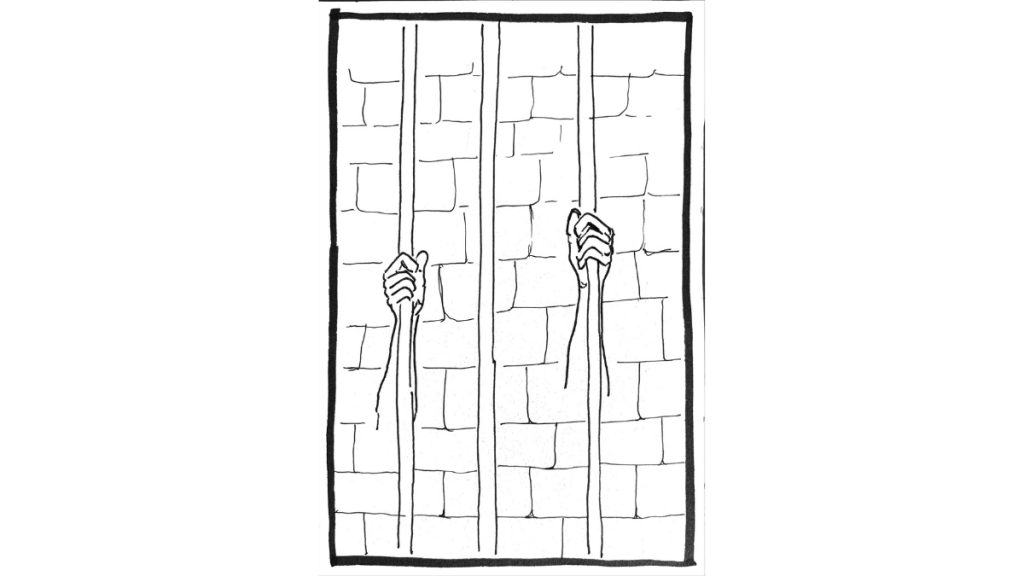
    The clang of the shackles and the unrepressed wrath for the Empire are felt in the sundry lookouts of the section entitled ‘Prison Days’. Verses of the ‘Days When the Lotus Blooms’ are evanescent of the bereaved freedoms of the natives: These are the days when the lotus blooms/ In the foresaken garden near my home—/ Faraway./ Forsaken, yes,/ And faraway./ And behind me is the might of the whole empire,/ I am not forsaken./ Lotuses/ An expanse of limpidity/ Free spaces/ Five measured paces this way/ Five measured paces that way/ Prison. 

    Yet another titled ‘The Dispossessed’ spews whiffs of the bemusing vexations of the countrymen : But we are not the dispossessed;/ We are possessed of a fiend who knows no chains,/ Whom bars do not bind: 

    The one that blatantly arouses the virginal senses of the reader — or so this reader feels — is ‘The Breakers’  whose last three words scream of the aspirations that the hundreds of words imbued with raged emotions strewn on these pages struggle to effuse : Equality/ Fraternity/ Liberty? 

    Prison ordeals aside, another theme for which the poet proves his flair, is that phenomenon, or rather the philosophical entity, that binds souls in staunch yet flaccid threads, called love. These unfazed utterances, as expressed in one such poem ‘Afterward’ : When I saw/ The two bright red curves of your lips/ I knew all else can be forgotten— could’ve been for the person to whom the poet dedicates these lines. 

    Ruminative themes such as change, fate, beauty and so on, also find place in his poems. 

    Though by no measure the erudite poet of our blinkered imaginations, Agyeya is a writer whose verses speak to us through the numerous latitudes we cross in our lives, without our ever having to sit on a couch and wrap ourselves in his words. A confluence of the vernacular — in its sensibility — and the foreign — in its outlay, these mellow poems characterise our infrequent returns to the past and travails of the present, and in these unsullied aspects, it truly proves its mettle. 

  • ‘His Neighbour’s Wife’ by Ruskin Bond

    ‘His Neighbour’s Wife’ by Ruskin Bond

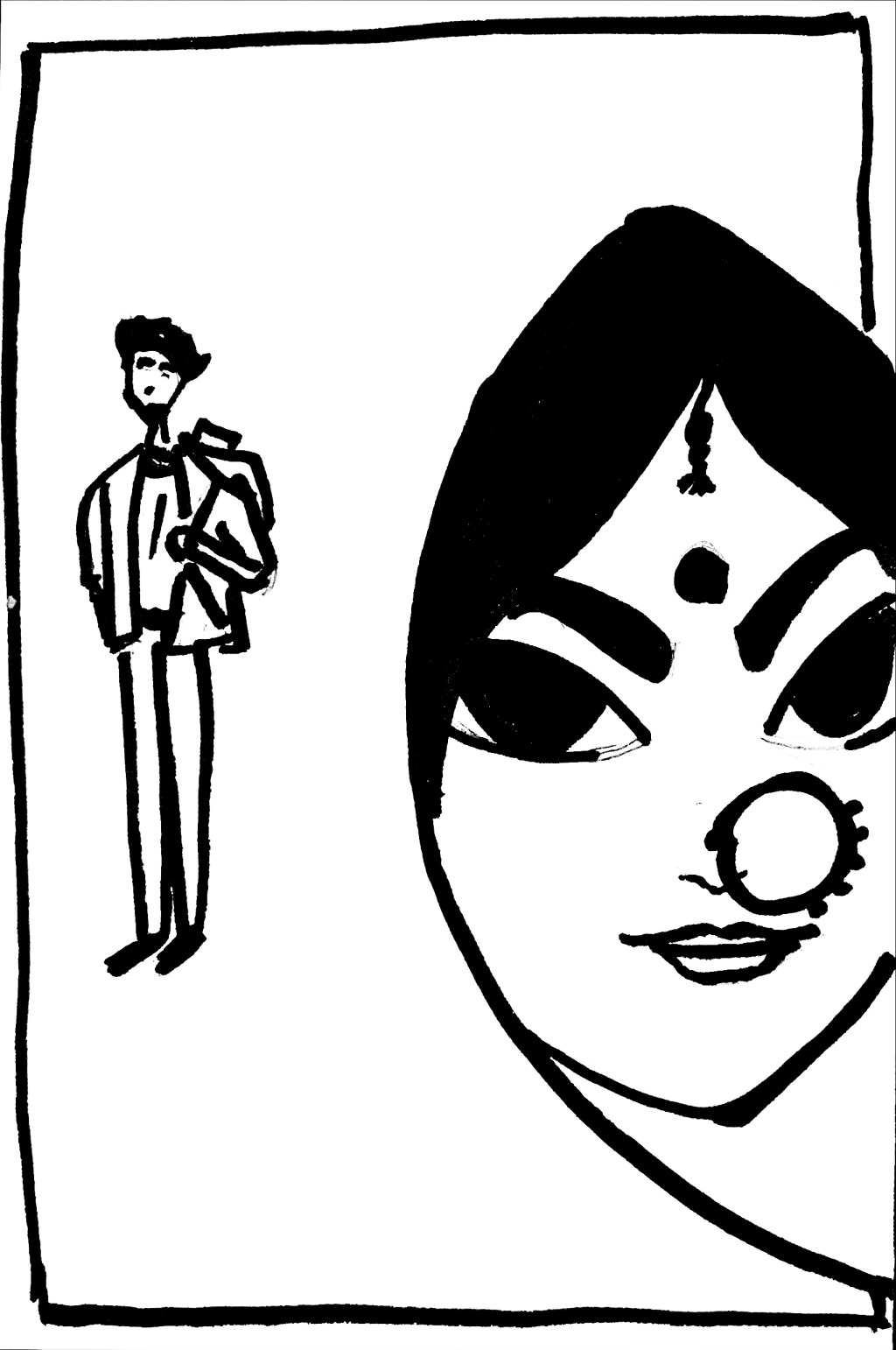
    A ‘handsome’, exquisite, middle-aged woman with a burly body—not the quintessential dame you would find these days. Bond enlivens the woman through his descriptions of her paan-tainted red lips amid the greasy bronze skin. The racy puffs at the hookah, no less.  

    While the narrator and his friend Arun, awaits the dinner, the latter takes the plunge into his marital life, the story of how he met that strangely attractive woman, Leela, his wife. 

    Though younger by five years, Arun made company with Leela, who at the time was subject to frequent desertions from her husband. As was apparent, this extroverted, ‘hard-drinking’ man cared little.  She had a son named Chandu, for whom the narrator took a fervid dislike owing to his unremarkable disposition, to speak nothing of the slurs and insults he would pass on. 

    Troubled at Arun’s venture into eternal bachelorship, Leela scoured for a suitable bride for some time, but to no avail. 

    The next shock blew in with the death of her husband which rendered her roofless with no option but to leave for her village near Agra. Yet she wasn’t done with the duty she had embarked on; a bride for her long-time friend. 

    Alas, at the time of her departure, Arun has these words tumbling out of his mouth, ‘Why don’t you marry me now?’


    It would suffice to say that the story only makes for a dulcet read, and doesn’t give anything new. A seemingly reserved tale which makes no pretensions. Nevertheless, it leaves the feeling that there could’ve been more to the story given the intricate lives of many such women of present times, in plain settings like these. 

  • Colonialist writings of Indian History

    When the Britons sought to secure their power in India, little did they know of the perils that would await them of administering a land worlds removed from the Victorian habitat. As Bengal and Bihar fell into the hands of the East India company, finding it tedious to administer so alien, so complex a culture, pandits and maulvis are were called upon to assist judges in administering laws specific to each religion. Manusmriti, the law-book of Manu, a word of authority in Hindu code, was translated in this spirit, under the title A Code of Gentoo Laws. Topping it all set out the tides of translations and researches, in earnest attempts to decipher the customs and ways of life of the people. An extended version of this frenzy resulted in the establishment of the Asiatic society of Bengal in 1784 by the well-known, good old William Jones. This man was the first to suggest the semblance between Sanskrit and other European languages (Latin and Greek). He also translated the classic Sanskrit play Abhijnanashakuntalam in 1789. The Bhagvadgita was translated by one Mr. Wilkins in 1785, who’s also one among the founding fathers of the society.

    Max Mueller, another prominent figure, pushed forth these attempts by commissioning, on a massive scale, translations of several Indian texts—of which he was also an editor—and published under Sacred Books of the East series. Mueller and the scholars, however made shrewd generalisations of Indian culture, spiritualism and ethos, which were on the whole unjustified. Belonging to the same bandwagon is V.A. Smith whose Early History of India was grounded on a skewed interpretation, imbued with wanton inferences; the characterisation of Indian polity as despotic, autocratic, inhabited by divergent groups with no political unity whatsoever; no civilisation; and so on and so forth. Understandably, given that these histories were constructed to quench the Imperialists’ ego and justifications for their rule, it was indubitably meant to be this way. However, this also drew negative connotations of Indian culture. It must be said that on certain fronts, the imperialists’ opinions hold true: for instance, the allegation that Indians lacked a sense of history, that particularly chronology was not much valued upon. But when one gauges the wounds inflicted and juxtaposes it with the professed positive aspects of their interpretations, a grim picture does it show indeed.

  • How the term ‘Hindu’ came into being

    In short, the term ‘Hindu’ derives its origin from the Sanskrit word ‘Sindhu’ that watered through the northwestern parts of the region and which now encapsulates the countries of India, Pakistan, Bangladesh and Nepal. the northwest was the doorway to India for conquerors seeking to amass this land. When the foreigners chanced upon the inhabitants of this place who resided close to the banks of the Sindhu — or as it is know today, the Indus — they named the whole country after it; ‘India’ which resembles the Greek term for it.

    The syllable ‘s’ transmutes to ‘h’ in Persian (present-day Iranian) and so came the word ‘Hindu’ therefrom. Consequently, India was called ‘Al-Hind’ by Persians and Arabs. It may be of service to note here that the first Iranian inscriptions make reference to ‘Hindu’ as a district on the Indus. It neither alluded to a religion nor a community. It was only later in the 14th and 15th centuries that it came to denote the followers of a particular religion.