
A rejected short story, written during the days succeeding her home departure, while in college, and even dismissed by its own writer as a “vague symbolic tale”, Mary Ventura and the Ninth Kingdom is an absorbing story running almost fifty pages that rightly possesses nuances of mystery, death, sexuality with a tinge of juvenility. Not being one of her finest works, it is unsurprising that this piece was turned down by Mademoiselle magazine on submission. Perhaps, this unpublished work of the twenty-year-old Plath was fated to wither in her archives for years until the academic Judith Glazer-Raymo unearthed them.
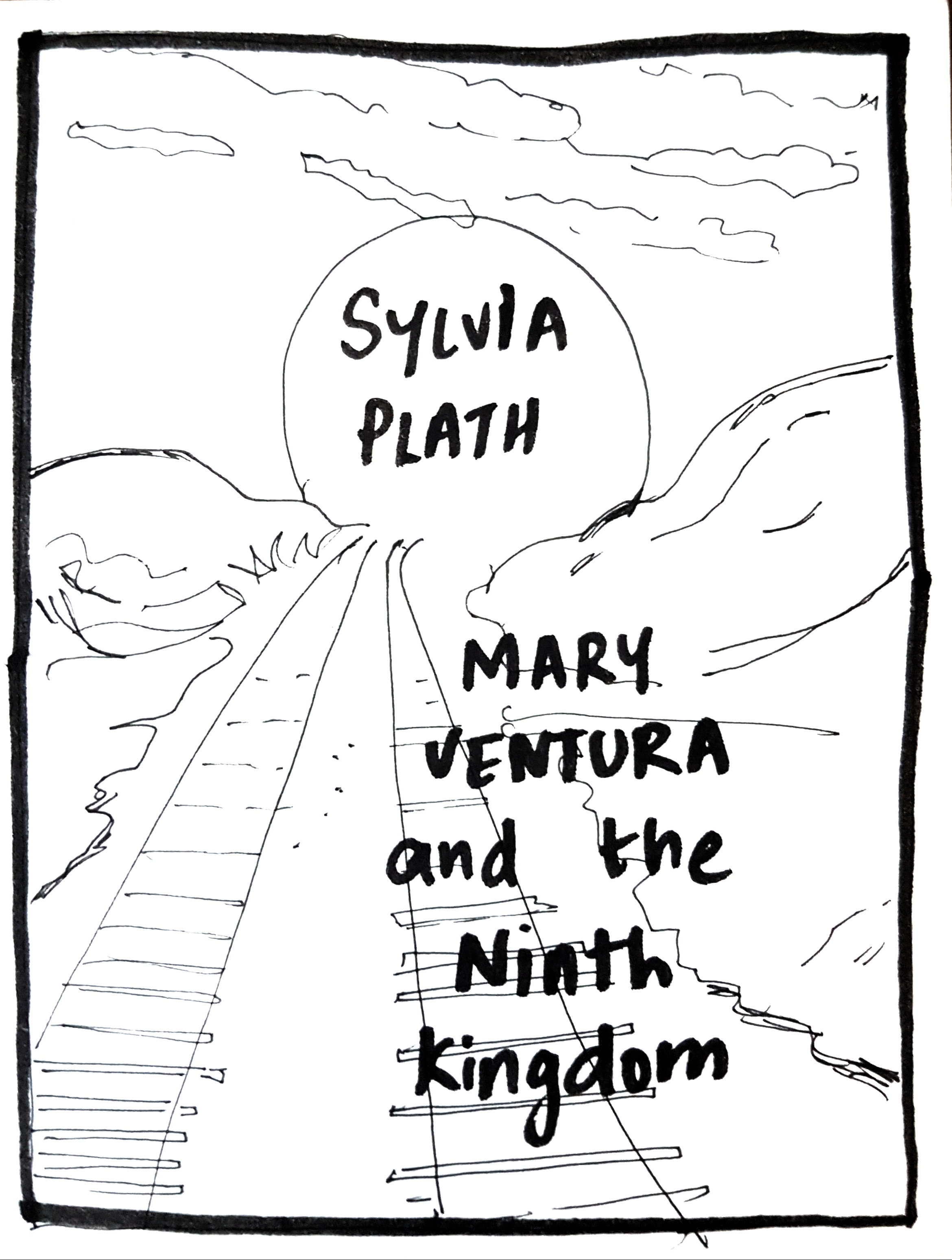
The basic thread of the story runs through Mary Ventura, the protagonist, who wades through unwieldy circumstances on a train ride—a ride destined for the “ninth kingdom”, the abode of frozen will, one where you’re coaxed to stomach and surrender to fate, and purportedly, as the overtones of the story suggests, to meet one’s makers. Enriching the narrative’s platter are Plath’s colored descriptions of the scenes that encompass the story, often disturbing that it compels one to foresee the slowly unfolding doom. To quote a few lines:
“Blood oozed from a purpling bruise. The younger boy began to whimper.”
“The train had shot into the somber gray afternoon, and the bleak autumn fields stretched away on either side of the tracks beyond the cinder beds. In the sky hung a flat orange disc that was the sun.”

In a notable conversation with the woman Mary encountered in the train, the reader, who can prudently parse the context, would be much able to suppose a faint suspense that builds in the novel thereafter.
[Mary] “I shouldn’t wonder. It is a comfortable ride, really. They do so many nice extra little things, like the refreshments every hour, and the drinks in the card room, and the lounges in the dining car. It’s almost as good as a hotel.”
The woman flashed her a sharp look.
“Yes my dear,” she said dryly, “but remember you pay for it. You pay for it all in the end. It’s their business to make the trip attractive. The train company has more than a pure friendly interest in the passengers.”
And then the story proceeds spanning Mary’s entire journey, and the sometimes fortuitous exchanges and situations that ultimately make Mary refurbish the dole that confronts her life.
Though not an outright masterpiece, the contours of this story reflects Plath’s dubiety about the path she trods in her own life and in many instances, through Mary’s desperate enquiries and yearnings to get out, one can sense Plath’s own trepidations about her journey in this world.
Mary Ventura and the Ninth Kingdom qualifies a one-time read; however, better would be an audio version of the same, some with excellent narration accompanying it. Be not prepared to be enthralled by the tale, but grasp the vexations of a young mind that imprint the journey towards the making of a great writer.
More
 The Unsaturated Reader
Leave a comment